In shortOn 11 November 2026, the NEXA panel at ToruńCAMERIMAGE asked how to push a vision forward with new technology. Our answer from the stage: every new tool in cinema removed some limits, and none replaced the filmmaker. AI is the next one. It speeds up research, concepts and rendering. People still design the world, choose the shots and finish the picture.
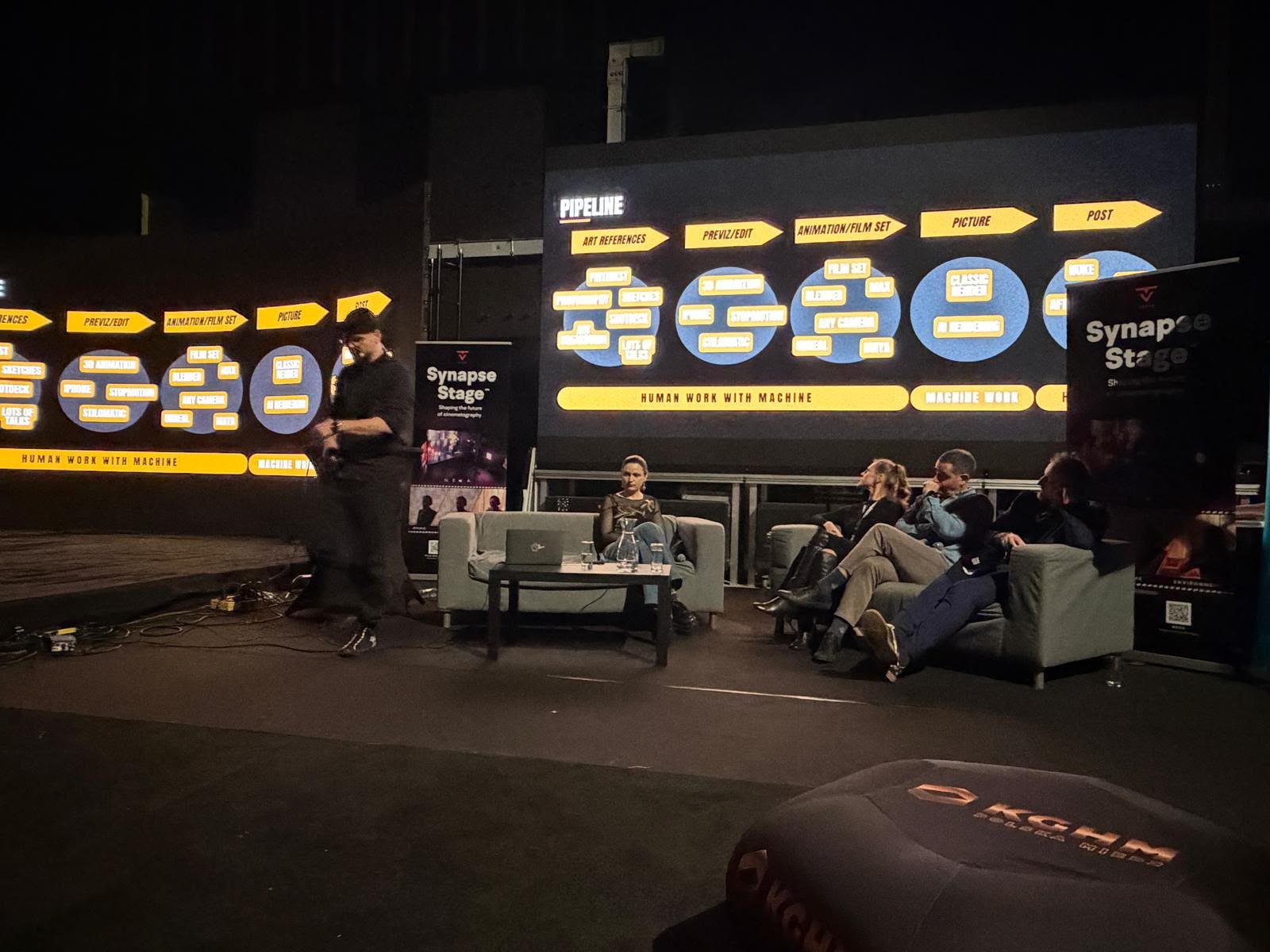
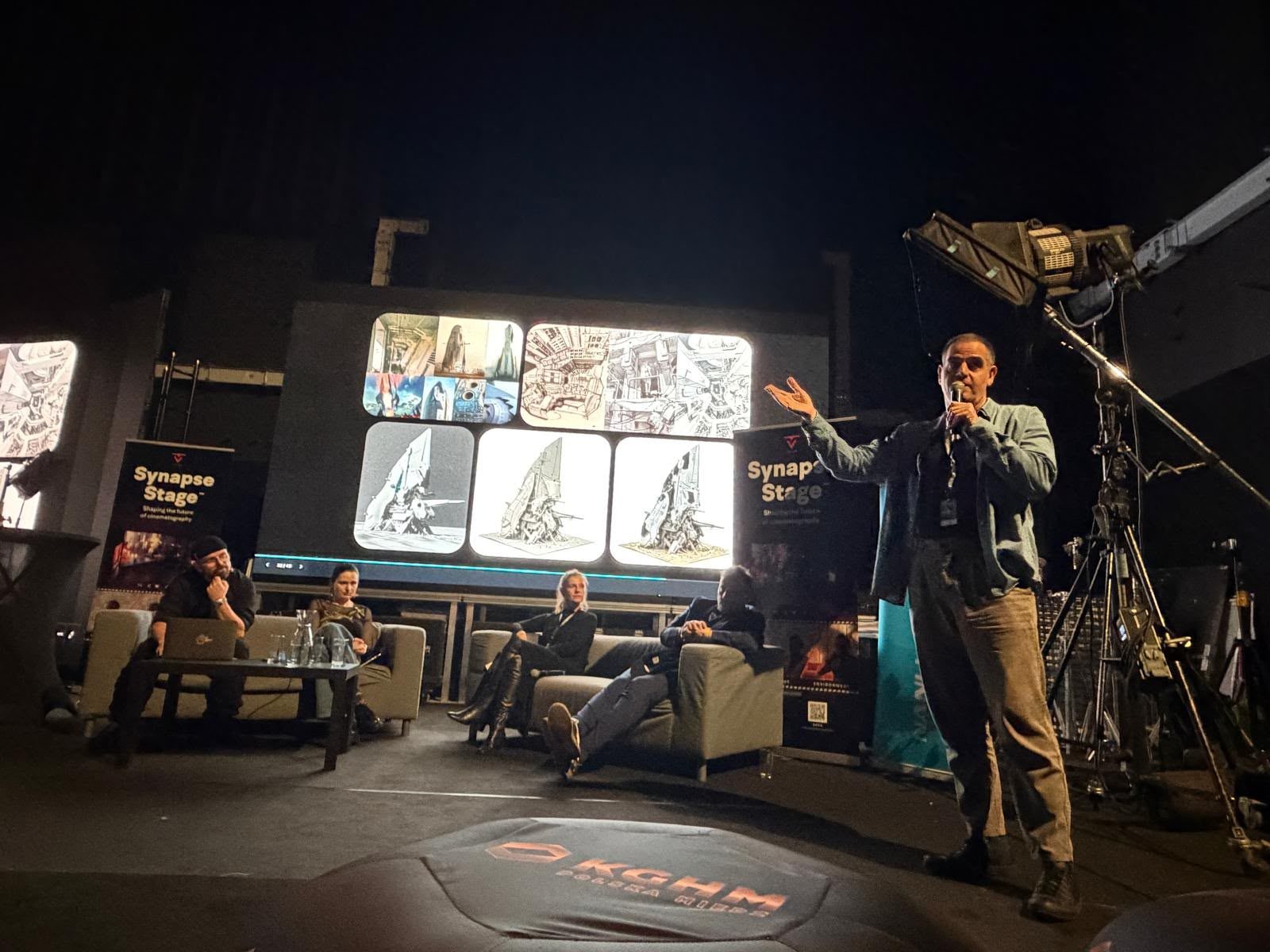
The NEXA panel on the Synapse Stage, ToruńCAMERIMAGE, 11 November 2026. On the wall: the NEXA production pipeline. Photo: Veles Productions.
Cinema has changed its tools again and again. Each time, the new tool felt like a threat, and each time it became one more thing a filmmaker can use. That's the case we made on the ToruńCAMERIMAGE stage, and it's the case for AI. Below is the argument in three parts, then what we'd take from it into your own project.
01 · History
New tools remove limits. They haven't replaced the filmmaker.
Sound, colour, effects, CGI and LED volumes each arrived as a hope. Each became part of the craft.
We put the milestones on one timeline. Today a single film can mix practical effects, an LED volume, classic VFX and green screen, and the director picks what the story needs. AI is the next entry on that list.
The timeline from the NEXA panel. AI is the next entry.
The crew shows the same pattern. Traditional film tells its story with acting, cameras and light. Motion capture added body motion, modern film added VFX, and future film adds AI. It's one more skill in the same crowd of actors, grips, DoPs, designers, sound, director and VFX supervisor. The story is still told by people.
Can AI make a film on its own? So far, not one that audiences paid for.
We showed one test case. Sanxingdui: Future Past, billed as China's first fully AI-generated feature, opened on 23 October 2026. It took about $181,000 in its first days, against a reported budget of $1.5 million.
$1.5Mreported budget
$181Kbox office, first days
12%of the budget earned back
Figures as reported by the trade press; the run was still early. Source: PetaPixel, 28 October 2026.
We drew three lessons. AI moved the pipeline's bottleneck from creation to technology. Audiences don't want to pay for pure AI. And mastering the tools isn't mastering the story.
02 · Craft
A film is a chain of decisions, and AI is one more option in it.
At every link the filmmaker chooses a tool. AI joins paper, photography, sound stages and green screen on the list.
Many AI videos on social media follow a short chain: an idea, a chat model, an image model, a video model, an edit. A film has more links. Each one has its own tools, and AI appears in only some of them.
The short chain
Idea
ChatGPT
Nano Banana
Higgsfield
Resolve
Film
The film chain
Idea
Script
Word
Celtx
AI
Art and design
Paper
References
Photo
AI
Film shoot
Sound stage
Exterior
Interior
Green screen
Post
3D
Colour
Digital matte painting
Comp
AI
Film
Where AI appears as an option in a film chain, marked in red.
Across a project, we use AI for research, mood boards, pitch decks, concepts, data management and workflow speed-ups, from the first pitch to post. The evening before, Artur Paprocki showed the same idea on the Synapse Stage: where AI changes the frame and where the stage still does the work.
03 · Practice
NEXA is how we apply that: people design, machines explore and render.
A human designs the world. Machines speed up exploration and the final render. People finish the film.
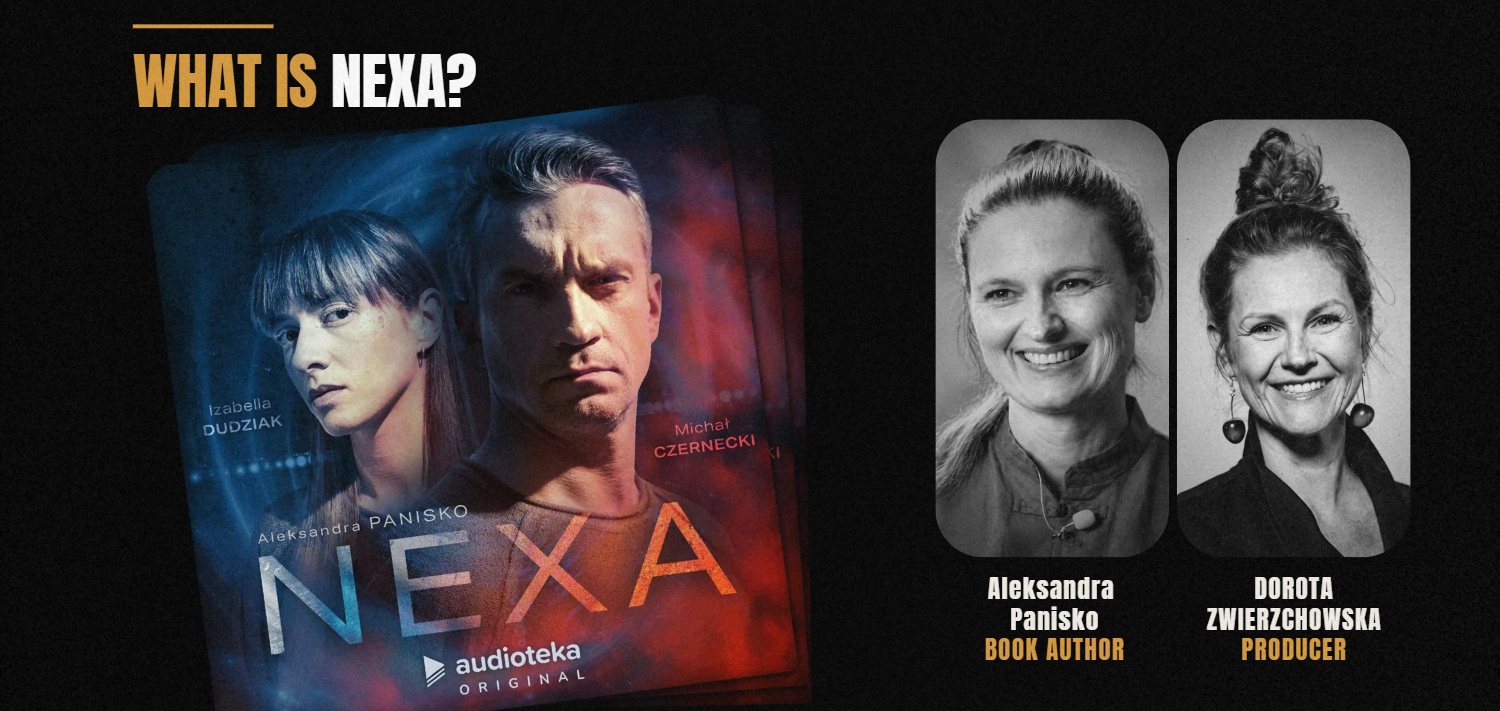
NEXA is a science-fiction story by Aleksandra Panisko, and Veles Productions is developing it as a ten-episode series of 45 minutes, in the spirit of Stanisław Lem. A ship sent from a dying Earth reaches a new colony and goes silent. A young student sets out to find the man she loves. The story first reached audiences as an Audioteka Original. Producer Dorota Zwierzchowska and the author presented it on the panel.
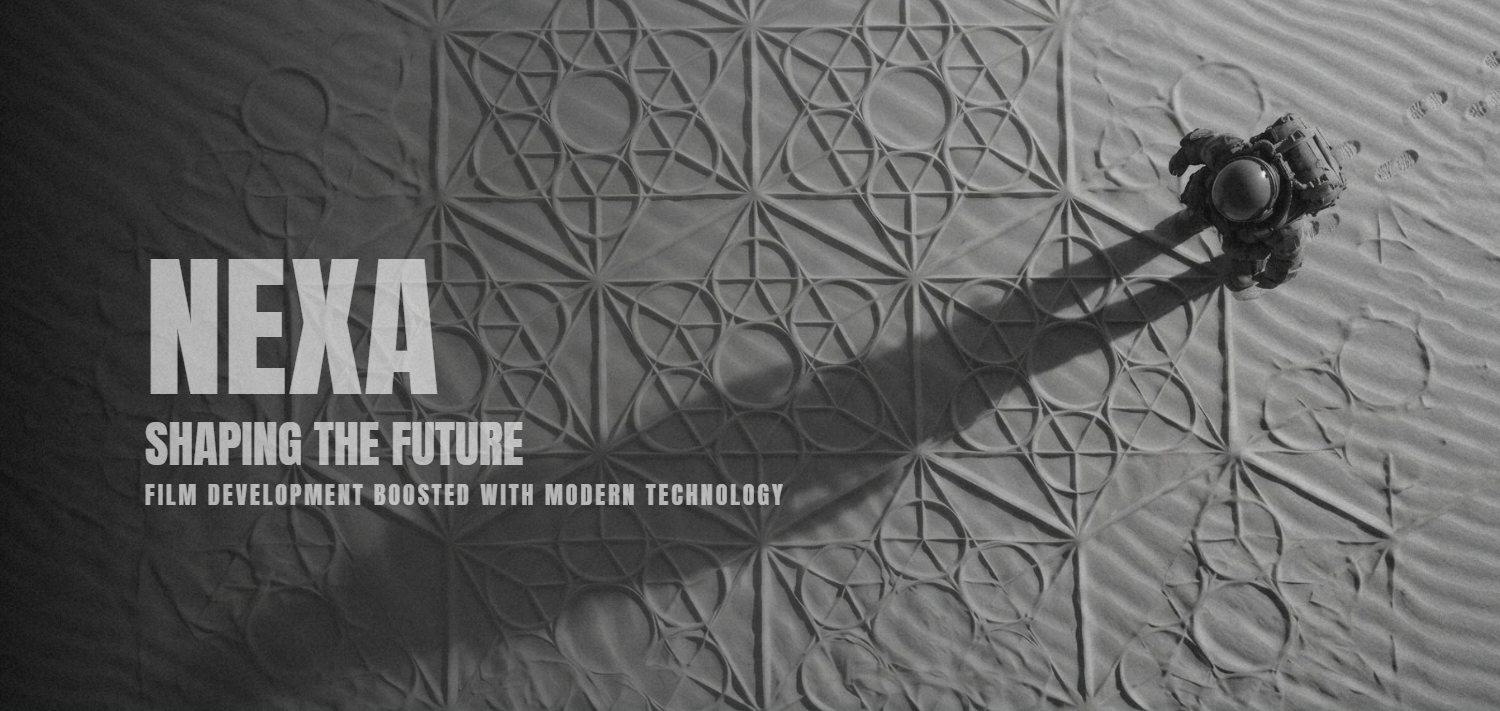
The NEXA audiobook, its author and its producer.NEXA: film development boosted with modern technology.
The world starts with references and a designer.
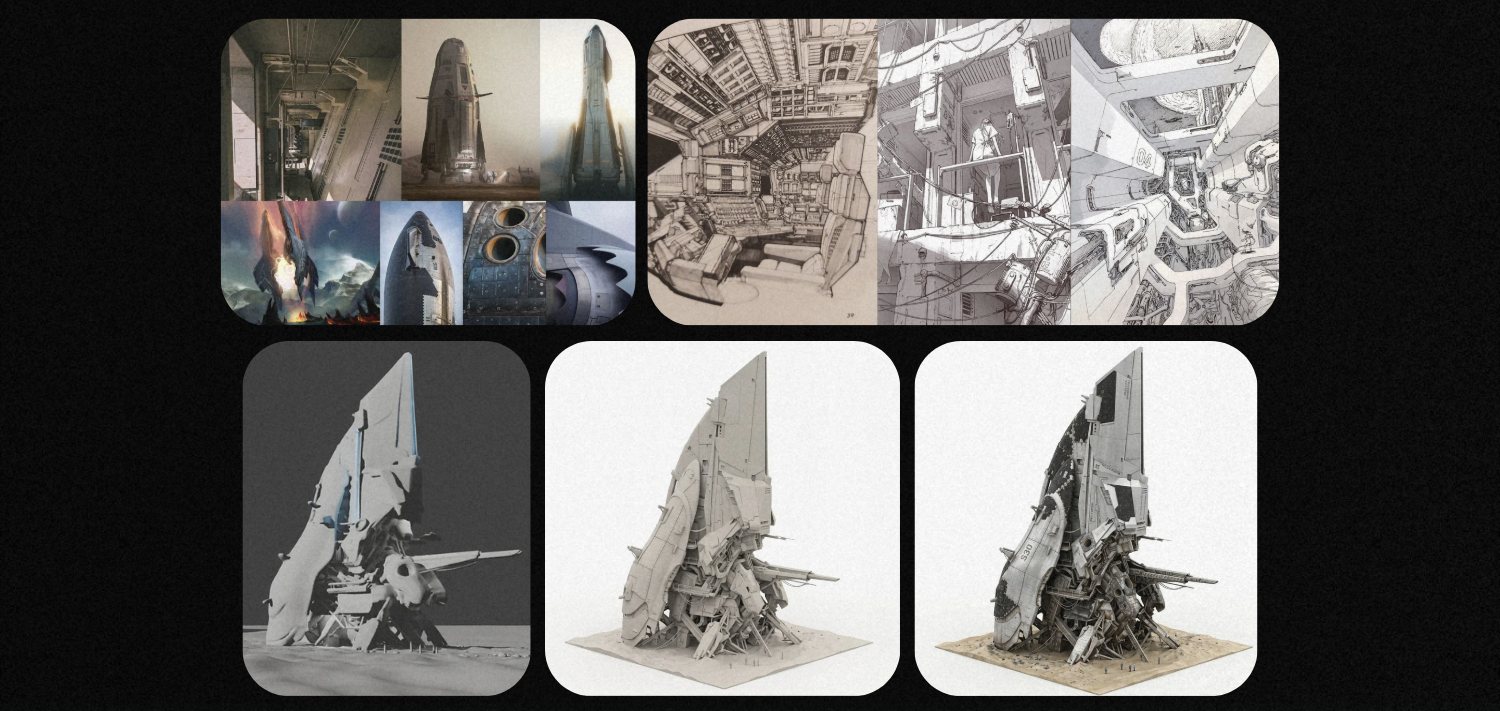
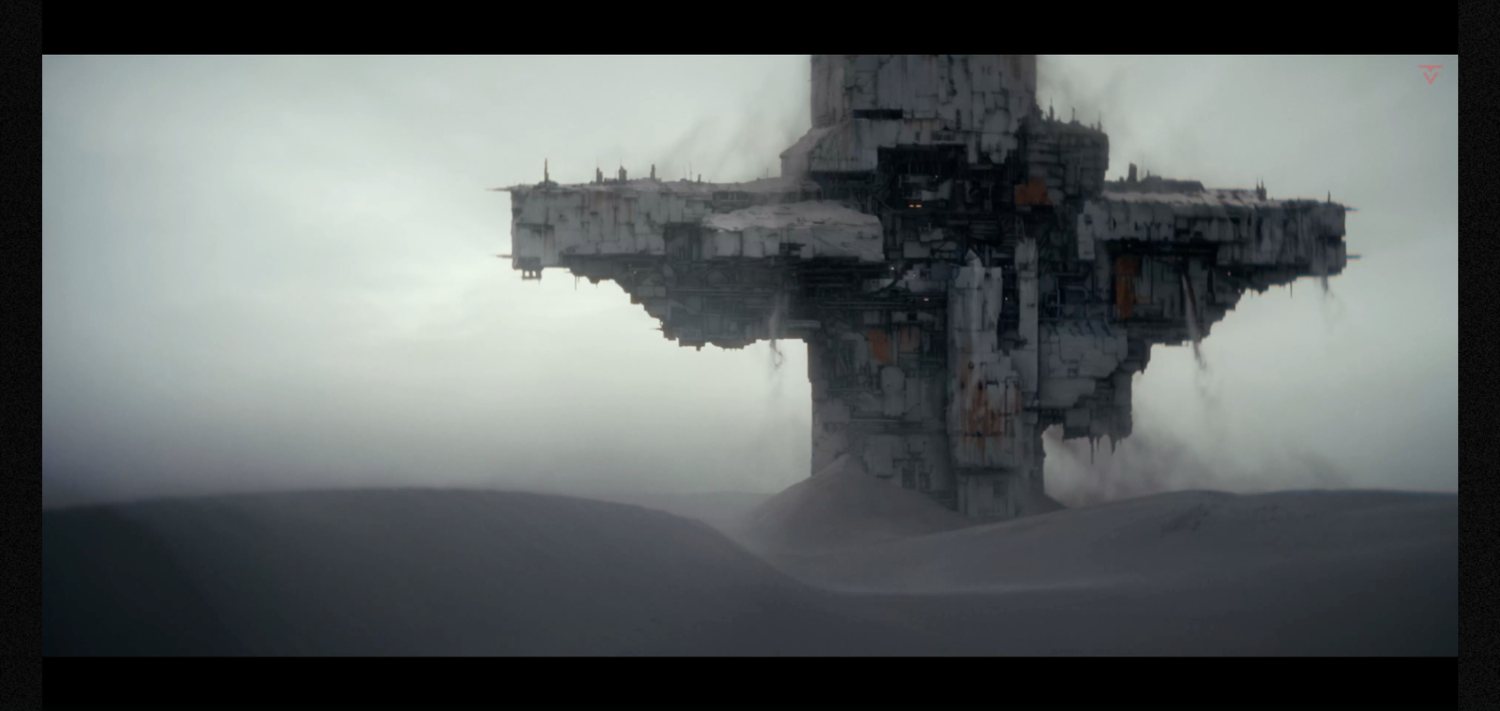
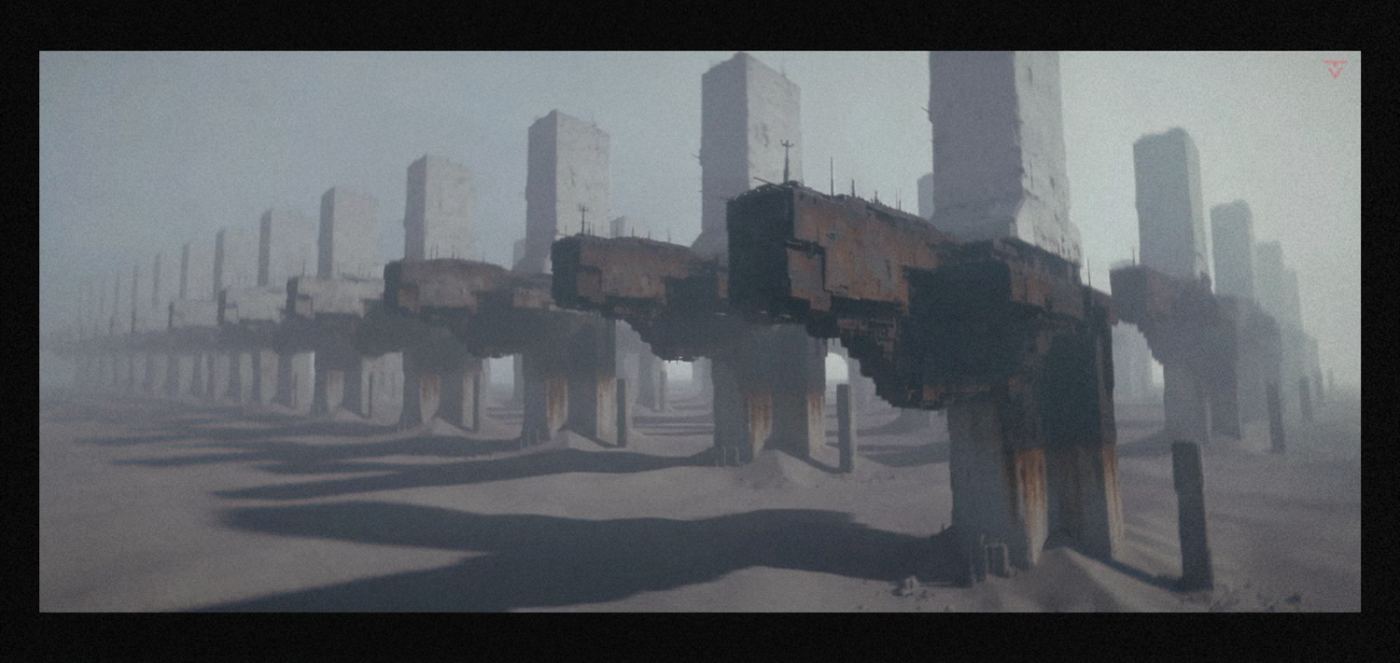
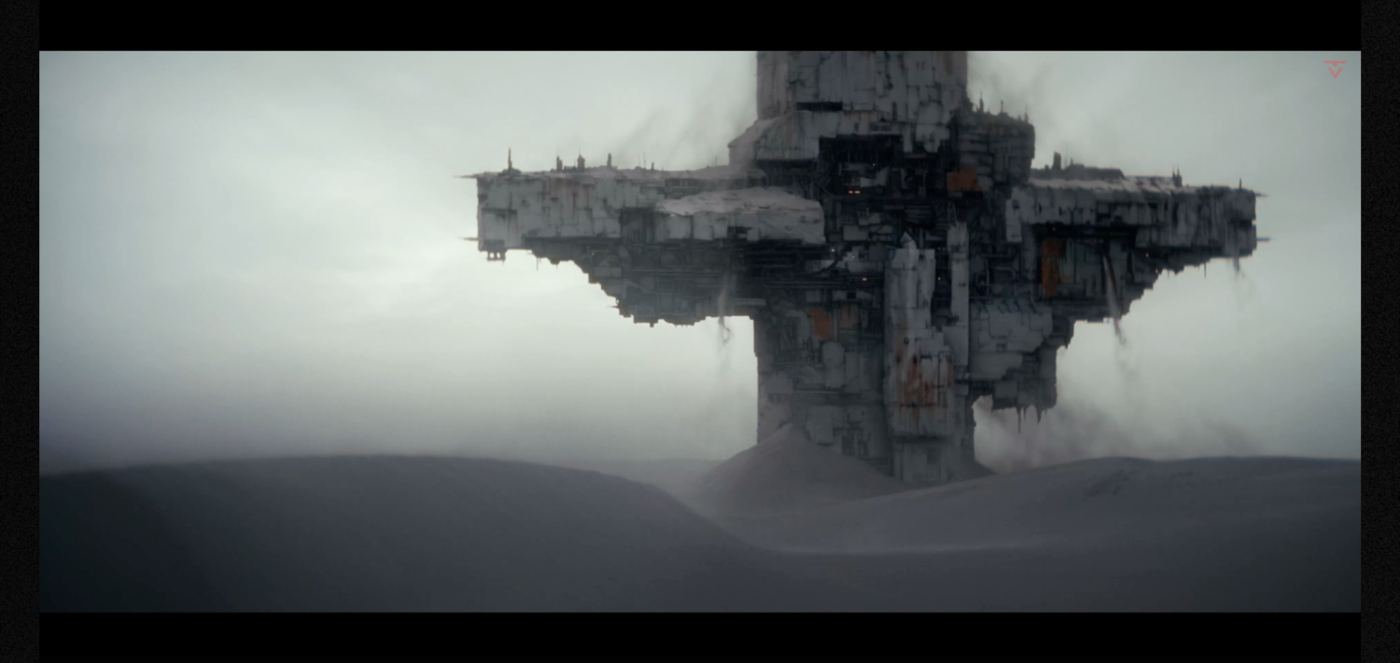
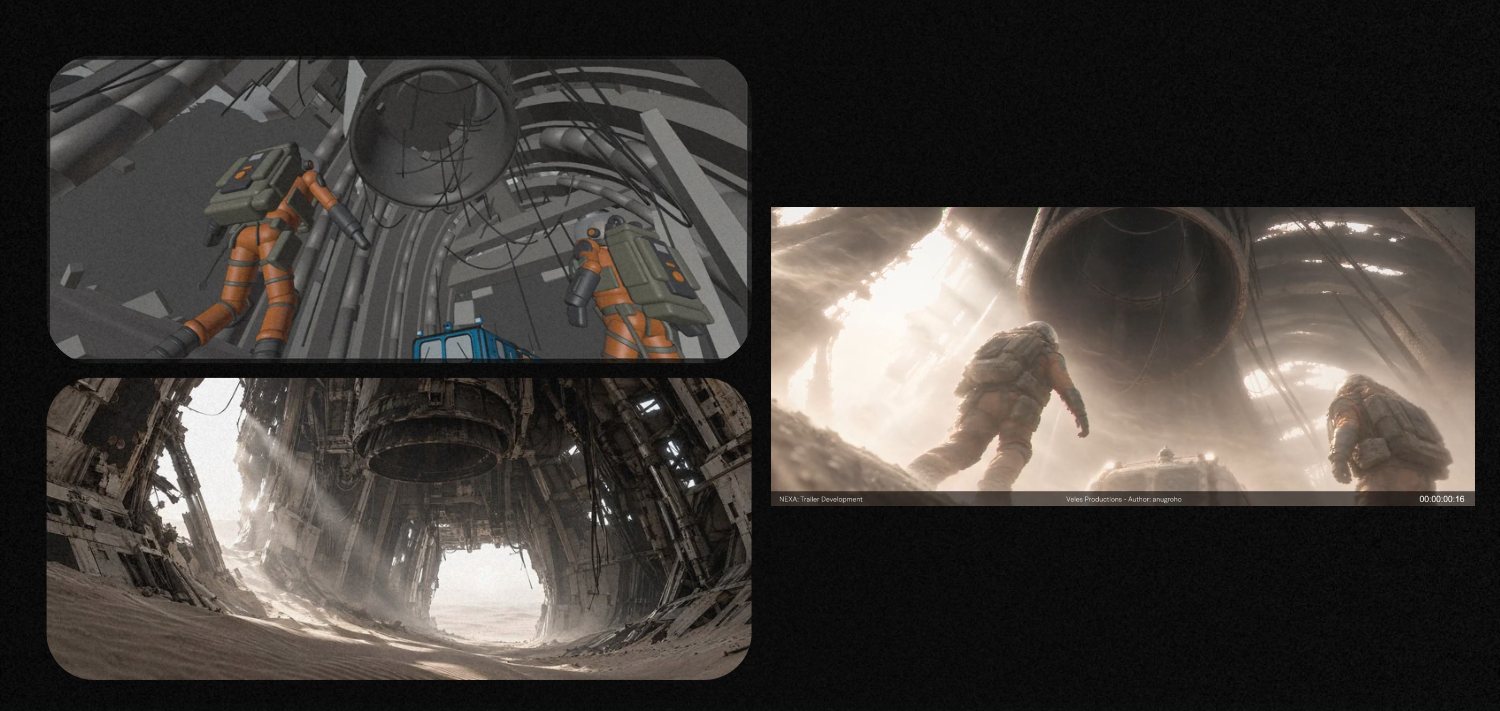
Set designer and architect Jose Barbella designed the ship and the desert architecture. His path runs from references and pencil sketches to clay-style models, then to finished frames. Each step answers a question the director asked, and a person chooses what goes forward.
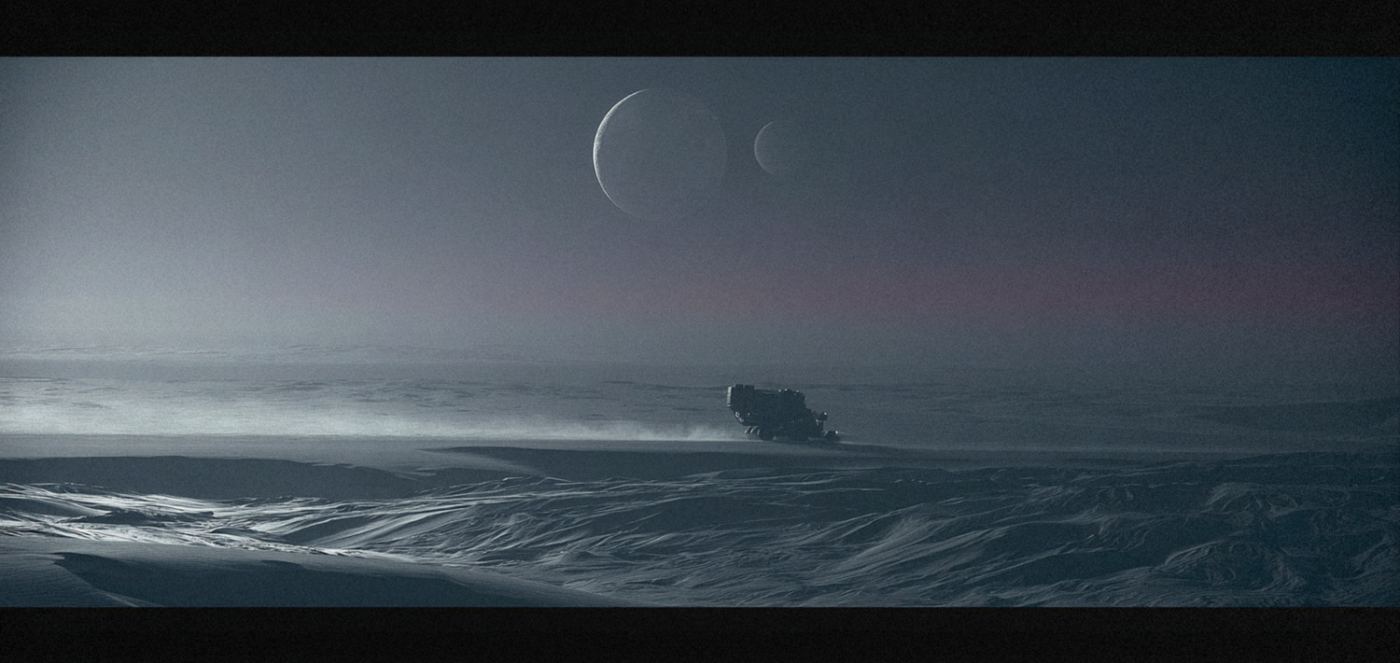
Exploration: references, sketches and models of the ship.Frame: the ship in its desert.
The desert architecture, from model to frame.A frame of a structure hanging in the fog.
Walking the audience through the design on stage. Photo: Veles Productions.
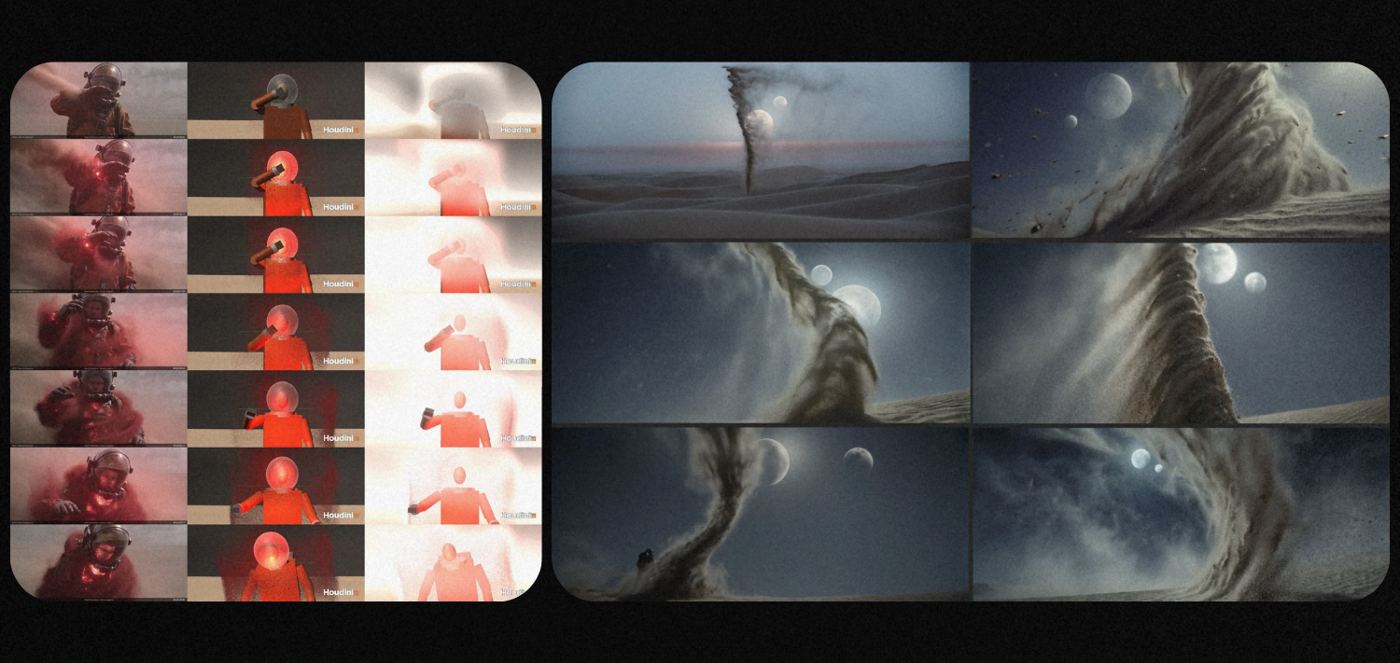
AI label: development imagery on these slides includes AI-generated frames, as the pipeline below shows.
The pipeline gives each step to the right kind of work.
Five steps. We use whatever fits: Pinterest and Shotdeck for references, an iPhone for previz, Blender, Maya or Unreal for 3D, and any camera. Only the picture step is machine work. Humans work with machines in the first three steps, and humans finish in post.
Art referencesPinterest, photography, sketches, Shotdeck, art breakdown, lots of talks
Animation / film setFilm set, Max, Blender, any camera, Unreal, Maya
PictureClassic render, AI rendering
PostNuke, Resolve, After Effects, Premiere, Avid
Human work with machineMachine workHuman work
The NEXA pipeline, as shown on the panel slide.
Concept frame: NEXA's world.Previz tests and storyboard frames.
The 3D team builds what the camera needs.
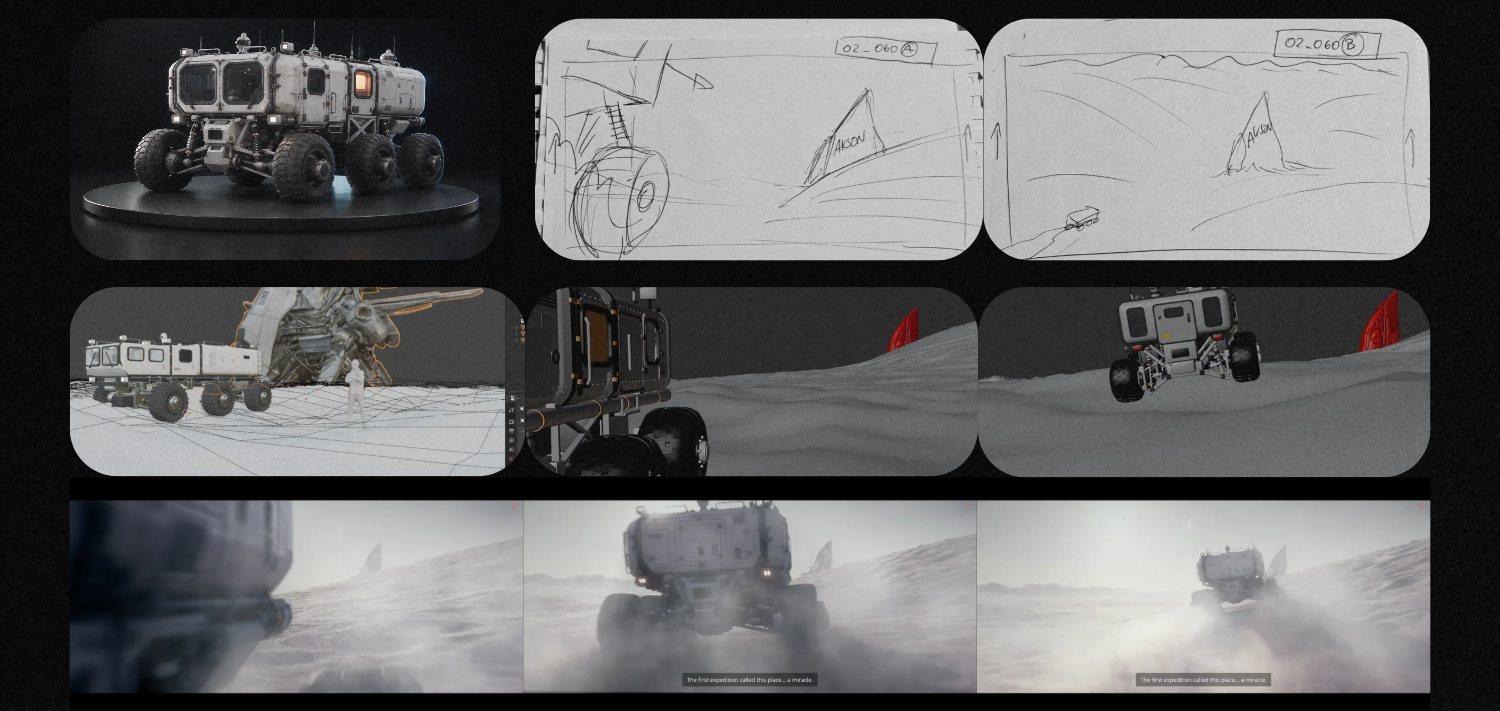
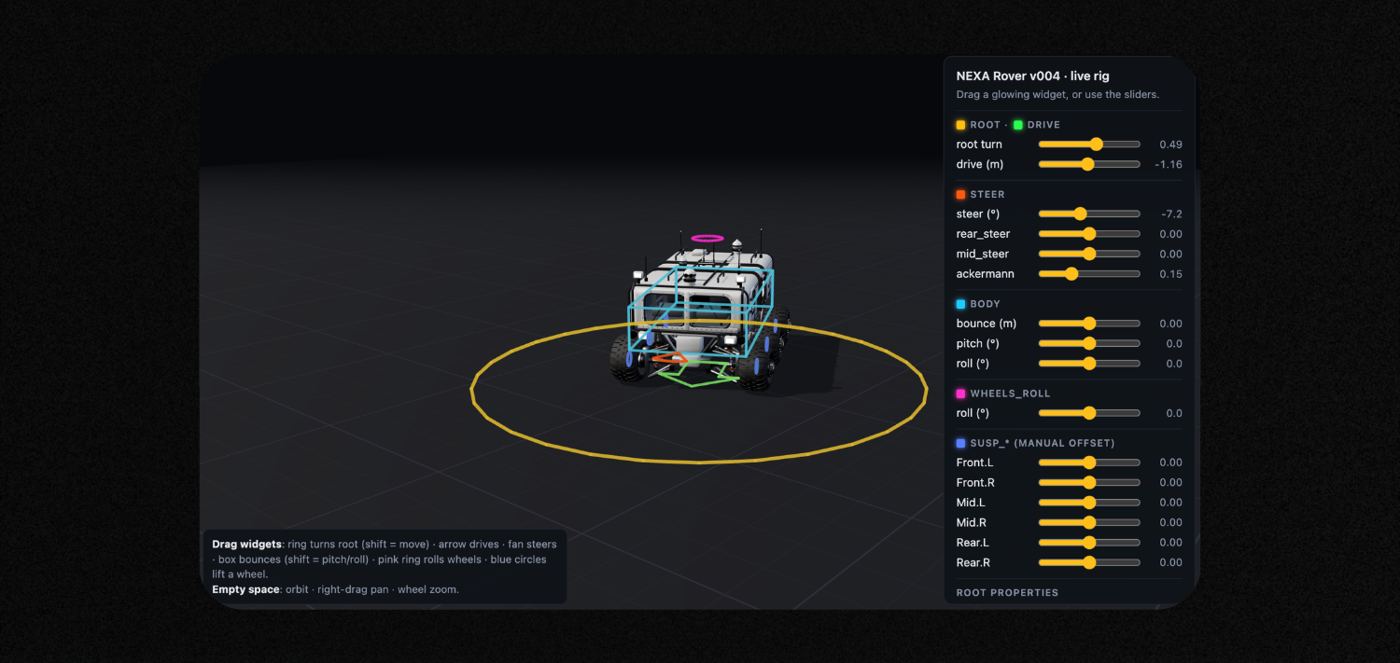
CG lead artist and animator Arif A. Nugroho builds the ships, vehicles and rigs. The NEXA rover goes from a model on a turntable, through storyboard sketches, to shots in the dust. It also has an interactive rig: drag a handle to drive, steer, bounce the body or roll the wheels.
The NEXA rover, from model to storyboard to shot.The interactive rig, with sliders for drive, steer and body.
04 · Your project
If you're starting a film or series with AI, here's what we'd take from this.
Use AI to explore faster. Keep people on the choices that make the story.
Start with references and sketches. Let machines explore variations of them, and have a person pick.
Choose a tool for each link in the chain. Don't let one tool define the whole film.
Use AI early and often for research, mood boards, pitch decks and concepts.
Keep humans on design and on the finish. In our pipeline, only the picture step is machine work.
Budget for the story, not only the tools. A pure AI film wasn't enough for audiences to pay.
AI won't make you a better filmmaker. It will help you do something new.
That was the last line of the panel. The next slide said "Maybe." We left it there.
Concept frames for NEXA's interiors.
Developing a film or a series?
Bring the story. We'll show you where a new tool helps and where a person has to decide.
About the panel. NEXA: Shape the future. How to push your vision forward with new technology? ToruńCAMERIMAGE, 11 November 2026, Synapse Stage. Speakers listed in the deck: Artur Paprocki (CEO, Veles Productions), Kamil Pohl (creative director), Dorota Zwierzchowska (producer), Aleksandra Panisko (author) and Jose Barbella (set design). Read the Synapse Stage talk, or see more of our work on the films page.